हिन्दी


Table of contents [Show]
- Introduction
- How Do Hybrid Cars Work?
- Best Hybrid Cars in 2026: What Should Buyers Look For?
- Hybrid Cars vs. Gas Cars
- Why Consider a Hybrid Car in 2026?
- What Type of Hybrid Is Right for You?
- Hybrid vs. Plug-In Hybrid: What's the Difference?
- What Should You Check Before Buying a Hybrid?
- Beginner FAQs About Hybrid Cars
Introduction
Hybrid cars have become an important option for American drivers who want improved fuel efficiency without switching completely to an electric vehicle. In 2026, shoppers can choose from hybrid compact cars, sedans, SUVs, and other electrified vehicles designed for different budgets and driving needs.
Unlike a traditional gasoline car, a conventional hybrid combines a gasoline engine with one or more electric motors and a high-voltage battery. Depending on the driving conditions, the vehicle can use electric power, gasoline power, or a combination of both. This system can help reduce fuel consumption while maintaining the convenience of a gasoline-powered vehicle.
For anyone researching the best hybrid cars in the USA, the right choice depends on price, size, fuel economy, features, driving habits, passenger and cargo needs, and long-term ownership costs.
In this guide, Trendy Micho explains how hybrid cars work, which popular 2026 models are worth researching, and what buyers should consider before choosing one.
How Do Hybrid Cars Work?
A conventional hybrid uses two main sources of propulsion: a gasoline engine and an electric motor. A high-voltage battery stores electricity that can be used by the electric motor.
During braking and deceleration, many hybrids use regenerative braking. Instead of allowing all of the vehicle's kinetic energy to be lost as heat through the brakes, the system can recover some of that energy and send it back to the battery.
Most traditional hybrids do not need to be plugged into a wall outlet. The vehicle manages battery charging through regenerative braking and, depending on the system, the gasoline engine.
There are also plug-in hybrid electric vehicles (PHEVs). PHEVs have larger batteries and can be connected to an external power source. When sufficiently charged, a PHEV can drive on electric power for a certain distance before the gasoline engine becomes necessary.
This difference is important because a conventional hybrid and a plug-in hybrid can fit very different driving situations.
Best Hybrid Cars in 2026: What Should Buyers Look For?
There is no single hybrid that fits every American driver. A commuter who mainly drives through a city may have different priorities from a family that regularly takes long highway trips.
Here are five well-known hybrid models worth researching in 2026.
1. Toyota Prius
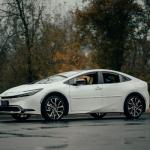
The Toyota Prius remains one of the most recognizable hybrid cars in the USA. Its strong focus on fuel efficiency makes it particularly relevant for drivers who spend many miles commuting.
For 2026, Toyota lists the Prius with a starting MSRP of $28,550 and an EPA-estimated fuel economy rating of up to 57 combined MPG on the most efficient front-wheel-drive configuration. Toyota also lists up to 196 net combined horsepower for AWD models.
Its hatchback design also provides useful cargo flexibility compared with many traditional sedans.
The Prius may be worth researching if fuel economy is one of your highest priorities.
2. Toyota Camry Hybrid
The Toyota Camry has moved to an all-hybrid powertrain for the 2026 model year. It continues to offer the familiar midsize-sedan format while adding hybrid-focused efficiency.
Toyota lists the 2026 Camry with a starting MSRP of $29,600 and an EPA-estimated rating of up to 51 combined MPG. Available all-wheel drive is another option for buyers who want additional drivetrain flexibility.
The Camry Hybrid can appeal to commuters and small families who want a traditional sedan rather than an SUV.
3. Honda Accord Hybrid
The Honda Accord is another well-known option in the midsize-sedan segment. For 2026, Honda lists the Accord Hybrid separately within its hybrid and electric lineup.
The 2026 Accord Hybrid starts at $33,795 according to Honda, with an EPA-rated 46 city / 41 highway MPG figure listed by the manufacturer.
It can be worth considering for drivers who want sedan practicality, modern technology, and a hybrid powertrain.
Before buying, compare the available trims and equipment because features and pricing can vary.
4. Toyota RAV4 Hybrid
For shoppers who prefer an SUV, the Toyota RAV4 Hybrid is an important model to research.
Toyota lists the 2026 RAV4 with a starting MSRP of $31,900 and an estimated 47 city / 40 highway MPG rating for the most efficient listed configuration. The 2026 lineup also includes a plug-in hybrid version for buyers who want externally rechargeable electric driving capability.
Its SUV body provides more passenger and cargo flexibility than many compact cars, making this type of hybrid relevant for families and everyday drivers.
5. Honda CR-V Hybrid
The Honda CR-V Hybrid is another compact SUV option for American buyers.
Honda lists the 2026 CR-V Hybrid with a starting MSRP of $35,630 and an EPA-rated 43 city / 36 highway MPG figure.
Its combination of SUV practicality and hybrid technology makes it relevant for commuters, families, and drivers who want additional cargo space.
Before purchasing, shoppers should compare current pricing, trims, equipment, fuel-economy ratings, and available safety features.
Hybrid Cars vs. Gas Cars
Understanding the difference between hybrid and gasoline vehicles can make the buying process easier.
| Feature | Hybrid Cars | Gasoline Cars |
|---|---|---|
| Powertrain | Gasoline engine + electric motor(s) | Gasoline engine |
| High-voltage battery | Yes | No hybrid battery |
| Fuel efficiency | Often designed for improved efficiency | Varies by vehicle and engine |
| Plug-in charging | Usually not required for conventional hybrids | Not required |
| Regenerative braking | Common | Generally not used as a hybrid energy-recovery system |
| Purchase price | Can be higher for some models | Available across a wide range of prices |
| Best suited to | Drivers prioritizing efficiency and electrified driving | Drivers who prefer a conventional powertrain |
Actual fuel economy, pricing, performance, maintenance costs, and ownership expenses vary by vehicle, trim, driving conditions, and location.
Why Consider a Hybrid Car in 2026?
One major reason shoppers consider hybrid cars in 2026 is fuel efficiency. If you drive many miles each week, fuel consumption can represent a significant part of your transportation budget.
Hybrids can also be useful for people who are interested in electrified transportation but are not ready to switch to a fully electric vehicle.
Another potential advantage is convenience. A conventional hybrid generally does not require the driver to plan charging stops or install a home charger.
However, buyers should look beyond fuel savings. Purchase price, insurance, maintenance, financing, depreciation, fuel prices, and annual mileage can all affect the total cost of ownership.
For example, paying more for a hybrid does not automatically guarantee that fuel savings will offset the higher purchase price. Your mileage and local fuel prices matter.
For this reason, Trendy Micho recommends comparing the complete ownership picture rather than choosing a vehicle based on fuel economy alone.
What Type of Hybrid Is Right for You?
For Daily Commuters
If most of your driving happens in cities and suburbs, a hybrid sedan or compact car may be a practical option.
Frequent stops and starts can give the hybrid system more opportunities to use electric assistance and regenerative braking. However, actual fuel economy will still depend on traffic, weather, driving style, and other conditions.
For Families
Families may prefer a hybrid SUV because it can provide additional passenger and cargo space.
Models such as the Toyota RAV4 Hybrid and Honda CR-V Hybrid are examples of compact hybrid SUVs worth researching in this category.
Families should compare rear-seat space, cargo capacity, child-seat compatibility, safety equipment, and fuel economy rather than focusing on the hybrid label alone.
For Long-Distance Drivers
Highway commuters should compare highway fuel economy, comfort, cargo capacity, driving range, seating, and available safety features.
A hybrid is not automatically the right choice simply because it uses less fuel. Your actual driving pattern matters.
If most of your driving is long highway travel, compare the vehicle's EPA ratings and consider how the vehicle performs during your typical trips.
Hybrid vs. Plug-In Hybrid: What's the Difference?
A traditional hybrid generally charges its high-voltage battery internally through regenerative braking and the vehicle's hybrid system.
A plug-in hybrid electric vehicle (PHEV) has a larger battery and can be connected to an external charger. This allows it to travel on electric power for a limited distance before the gasoline engine becomes necessary.
For example, someone with a short daily commute and convenient home charging may find a plug-in hybrid worth investigating.
Someone without convenient charging access may prefer a conventional hybrid because it does not normally require external charging.
Before buying a PHEV, check its electric driving range, charging requirements, battery specifications, available equipment, and any incentives that may apply to your location and situation.
Don't focus only on the sticker price. A smart comparison should include:
- MSRP and dealer pricing
- EPA fuel-economy ratings
- Trim-level features
- Warranty coverage
- Insurance costs
- Maintenance requirements
- Cargo and passenger space
- Safety and driver-assistance features
- Financing costs
- Your average annual mileage
- Fuel prices in your area
- Expected resale value and depreciation
It is also useful to take your preferred models for a test drive.
Pay attention to seating comfort, visibility, braking feel, cabin noise, steering, acceleration, cargo access, and how smoothly the hybrid system operates during normal driving.
If you are comparing several vehicles, getting insurance quotes before purchasing can also help you estimate the real cost of ownership.
Beginner FAQs About Hybrid Cars
1. Are hybrid cars worth considering in 2026?
They can be worth considering for drivers who want a combination of gasoline convenience and electric assistance.
Whether a specific hybrid makes financial sense depends on factors such as purchase price, fuel economy, annual mileage, fuel prices, financing, insurance, maintenance, and ownership period.
2. Do hybrid cars need to be plugged in?
Most conventional hybrids do not need to be plugged in.
They recharge their high-voltage batteries through regenerative braking and the vehicle's hybrid system.
Plug-in hybrids are different because they can be connected to an external power source and generally have a larger battery.
3. Are hybrid cars more expensive to maintain?
Maintenance varies by model.
Hybrids have specialized components such as electric motors and high-voltage batteries, but they may also have different maintenance requirements from gasoline-only vehicles.
Before purchasing, check the manufacturer's maintenance schedule, warranty coverage, and hybrid-component warranty for the specific model.
4. Which hybrid is best for a family?
There is no universal answer.
Families should compare passenger space, cargo capacity, safety features, fuel economy, price, available trims, and comfort.
A compact hybrid SUV such as the RAV4 Hybrid or CR-V Hybrid may suit some families, while a hybrid sedan such as the Camry Hybrid or Accord Hybrid may work better for others.
5. Can a hybrid car be used for long road trips?
Yes. Conventional hybrids can be used for long-distance travel like gasoline-powered vehicles.
They do not normally require charging stops because their batteries are charged by the vehicle's hybrid system.
For road trips, drivers should compare highway fuel economy, comfort, cargo space, seating, driving range, and overall vehicle size when selecting a model.